The isekai genre holds enduring appeal, yet tracking down a truly exceptional series that manages to secure more than a single season can surprisingly feel like a monumental task. While standout titles like No Game No Life captured viewers’ imaginations, they wrapped up far too quickly, leaving their true potential largely unexplored.
Fortunately, some multi-season hits have avoided this fate, weaving sprawling, ambitious narratives over the years. Shows such as Re:Zero consistently elevate their own standards with each new batch of episodes, proving that a long-running isekai can maintain high quality without dipping into disappointing arcs.
Overlord Maintains Its Momentum Through Four Stellar Seasons

Embracing the overpowered protagonist trope with a refreshing twist, Overlord has stood as a pillar of the genre for a decade. Debuting in 2015 at the peak of the isekai boom, it carved out a dedicated fanbase and maintained its prestige across four fantastic seasons.
Instead of casting its lead as a traditional hero, Overlord places him in the role of a villain. Trapped inside his favorite MMORPG as his overwhelmingly powerful in-game persona—Momonga, the guild master of Ainz Ooal Gown—he sets his sights on total world conquest alongside a roster of devoted subordinates.
KonoSuba Reigns Supreme as the Ultimate Isekai Comedy
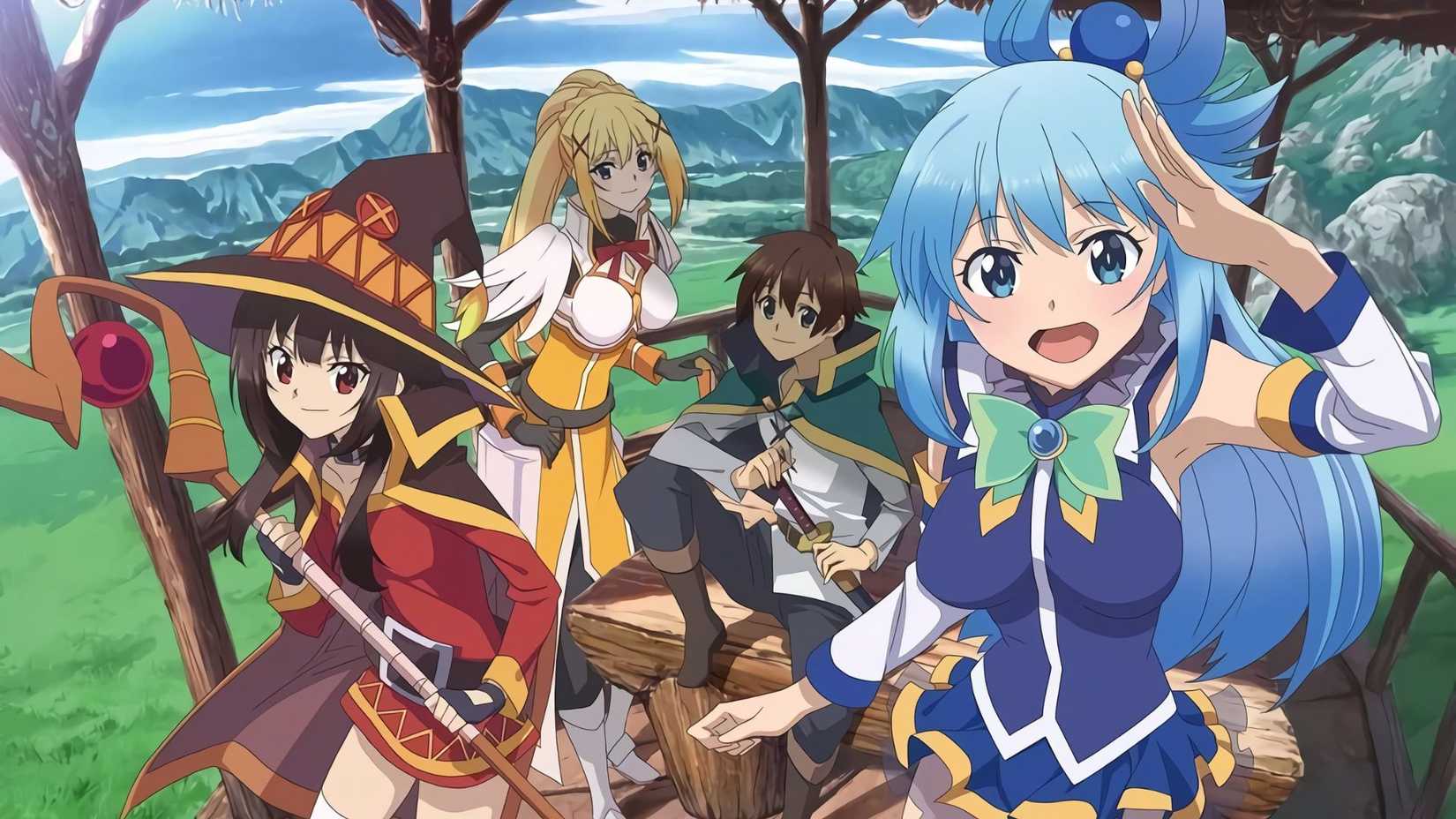
Parodies are common within this sphere of anime, but none match the absolute hilarity of KonoSuba. It comfortably claims the title of the funniest isekai anime while standing tall among comedy anime as a whole. The setup begins familiarly enough: after a sudden death, Kazuma Satou is reincarnated into a fantastical realm, granted the choice to bring a single item of his liking.
Opting out of practical gear, Kazuma chooses to bring the goddess Aqua along for the ride. Together, they assemble a thoroughly dysfunctional team of misfits completely unequipped for genuine heroics. KonoSuba expertly walks the line between mocking genre clichés and genuinely leaning into them.
Tsukimichi: Moonlit Fantasy Masters Classic Tropes

The overpowered main character is among the most frequent archetypes in modern anime, but Tsukimichi: Moonlit Fantasy proves the formula still works when steered away from lazy power fantasies. Though Misumi Makoto possesses immense strength, he is immediately spurned by the local goddess for not meeting her beauty standards.
Banished to the edge of the world and cursed to understand every language except human speech, Makoto faces hurdles that raw force alone cannot fix—even if divine blessings offer a helping hand. Whimsical, unique, and deeply entertaining, Tsukimichi continually grows more compelling with every new chapter.
El-Hazard: The Magnificent World Remains an Essential Classic

Stories about being whisked away to other realms existed long before the modern boom popularized the term “isekai.” El-Hazard: The Magnificent World is a prime historical example, following a group of high school students and their teacher as they stumble into an exotic fantasy setting caught in a war between humans and a local insectoid civilization.
Premiering in 1995, El-Hazard naturally lacks contemporary narrative twists, yet its execution has aged gracefully. It delivers a classic, charming adventure that easily captures the interest of modern viewers.
Kyou Kara Maou! Keeps Early-Era Tropes Feeling Fresh

Hailing from 2004, Kyou Kara Maou! kicks off with a brilliantly absurd premise: ordinary teenager Yuri Shibuya is accidentally flushed down a public toilet straight into a portal for another world. Here, he is destined to serve as the Demon King, forcing him to navigate complex political landscapes and cultural clashes.
By prioritizing diplomacy, dynamic character relationships, and lighthearted comedy, Kyou Kara Maou! stays surprisingly fresh even after two decades. Fans who fall in love with the premise are treated to over a hundred episodes of Yuri’s royal escapades.
Log Horizon Shines Through Clever Writing and Memorable Cast

The “trapped in a video game” concept was popular even during the nascent stages of the genre’s popularity. Although Log Horizon initially appeared to offer a standard take on the setup, it quickly elevated itself to become one of the smartest written series of its era.
The show’s greatest strength lies in its tactical approach to storytelling. Instead of relying on sheer muscle, protagonist Shiroe draws on years of veteran gaming experience and strategic intellect to survive. Combined with nuanced character writing, this makes Log Horizon an essential watch.
Ascendance of a Bookworm Delivers the Ultimate Low-Stakes Experience

Not every journey needs apocalyptic stakes to captivate an audience. For fans of cozy viewing, Ascendance of a Bookworm stands out as an absolute must-see. Before being reincarnated as a young girl named Myne, Urano Motosu was an avid bibliophile whose ultimate dream was to work as a librarian.
Finding that books are scarce in her new medieval-esque reality, Myne takes it upon herself to manufacture and distribute literature independently. Spanning three incredible seasons, the series trades typical action beats for relaxing vibes, deep character growth, and meticulous worldbuilding.
Mushoku Tensei: Jobless Reincarnation Evolves Exponentially

Mushoku Tensei: Jobless Reincarnation remains a polarizing title within the community, drawing equal parts heavy praise and severe criticism. However, much of the pushback directed at the series stems primarily from its early narrative stretches.
Protagonist Rudeus begins his journey as an unlikable, self-absorbed outcast. Yet, his glaring flaws form the foundation of a remarkably compelling redemption arc. Bolstered by rich dark fantasy lore and intricate worldbuilding, the show easily hooks viewers willing to look past its initial discomforts.
That Time I Got Reincarnated as a Slime Offers Surprising Depth

The literal title of That Time I Got Reincarnated as a Slime might suggest just another throwaway gimmick show. Instead, viewers are treated to the thoughtful adventures of Rimuru Tempest, a benevolent leader striving to carve out a society where humans and monsters coexist harmoniously.
Rimuru’s idealistic vision shapes the tone of the entire series, blending expansive lore and grand political maneuvers with lighthearted slice-of-life moments. It delivers a rich universe that audiences will happily lose themselves in for hours.
Re:Zero – Starting Life in Another World Stands as the Genre’s Pinnacle
Rarely does an isekai series earn widespread critical acclaim outside its core demographic, but Re:Zero – Starting Life in Another World thoroughly earns every bit of its praise. Its most famous hook subverts traditional power fantasies: protagonist Subaru Natsuki is denied god-like abilities, instead cursed with the power to loop time upon his death—a brutal mechanism used to save others at the expense of his own psychological well-being.
Beyond its bleak atmosphere, Re:Zero excels by weaponizing Subaru’s unique burden to drive an intricate, ever-expanding fantasy epic that grows increasingly complex and compelling with every new season.