Sticking the landing is notoriously difficult. A phenomenal anime can easily squander all the goodwill it built up by delivering a bewildering or deeply unsatisfying finale. Death Note is a prime example of this pitfall, trading its brilliant, slow-burn psychological chess match for a rushed conclusion that deviates sharply from the manga.
On other occasions, overly abstract or convoluted endings alienate viewers entirely, much like the infamous “Congratulations!” sequence in the original Neon Genesis Evangelion. While that finale holds undeniable thematic weight, fan debates persist—especially when compared to the definitive closure provided by The End of Evangelion and the Rebuild tetralogy.
Certainly, series praised for their conclusions (such as Fullmetal Alchemist: Brotherhood or Mob Psycho 100) aren’t entirely immune to critique, but those discussions rarely devolve into fierce arguments. Conversely, viewers largely agree that shows like The Promised Neverland squandered their incredible promise on a widely reviled final stretch.
Keeping these polarizing outcomes in mind, here are five anime series featuring conclusions that sparked intense controversy, leaving audiences divided right down the middle.
This article contains spoilers for the anime endings referenced below
1
Erased

Erased leverages time travel to craft a gripping narrative about second chances. The plot follows Satoru, a struggling manga artist who is involuntarily thrust back in time moments before local tragedies occur. When a serial killer targets those closest to him, Satoru must prevent multiple disasters. While the series excels at evoking childhood nostalgia and mounting tension, its final episodes leave fans feeling shortchanged.
Even though Satoru succeeds in saving lives, the anime crams a massive chunk of the manga’s concluding arcs into a single episode, leading to a breakneck resolution that lacks room to breathe. Furthermore, the ultimate showdown against the villain, Gaku Yashiro, feels strangely anticlimastic considering how much buildup preceded it. By rushing through the source material, the adaptation sacrifices vital context, character motivations, and backstory. While some might argue the emotional core remains intact, the heavy-handed, rushed reveals ultimately undermine what could have been a masterclass in suspense.
2
Attack on Titan
Hajime Isayama’s dark fantasy shonen masterpiece tackles deep moral ambiguities and how they warp protagonists like Eren Yeager, who begins his journey as an undisputed hero in Attack on Titan. Although the manga’s expanded conclusion addressed many initial complaints, reactions to the anime’s final adaptation remain sharply divided. Visually stunning though it may be, the ending introduces a dramatic shift in Eren’s underlying motivations, retroactively changing how viewers interpret the entire series.
For some, this shocking pivot works brilliantly, offering a tragic and complex perspective on an epic saga. For others, the sudden exposure of Eren’s hidden vulnerability feels like an abrupt betrayal of his established character arc. Combined with underdeveloped side plots, rapid-fire exposition dumps, and muted narrative consequences, the climax can feel somewhat hollow. While Isayama clearly intended to comment on the inescapable cycle of violence, the anime’s execution occasionally falters into thematic confusion.
3
Darling in the Franxx

Few anime conclusions generate as much friction as Darling in the Franxx. Set in a dystopian world where artificially created children are bred purely to defend humanity, the story primarily follows the bond between Hiro and Zero Two. The narrative culminates in a bittersweet finale where the protagonists sacrifice themselves in an interstellar war, only to be reincarnated generations later on a healed Earth.
While there is an inherent poetic beauty to a story championing eternal love that transcends death, the show reaches this destination via an aggressively jarring left turn. Series like Cowboy Bebop have successfully pulled off main character deaths, but Darling in the Franxx speeds through its final acts in a way that feels unearned. The manga adopts a much more grounded trajectory for Hiro and Zero Two while giving the supporting cast proper closure. For a show dedicated to exploring what defines humanity, shipping its leads off to a space battle and a sudden reincarnation strips away the emotional weight built up over the series.
4
Tokyo Ghoul: Root A

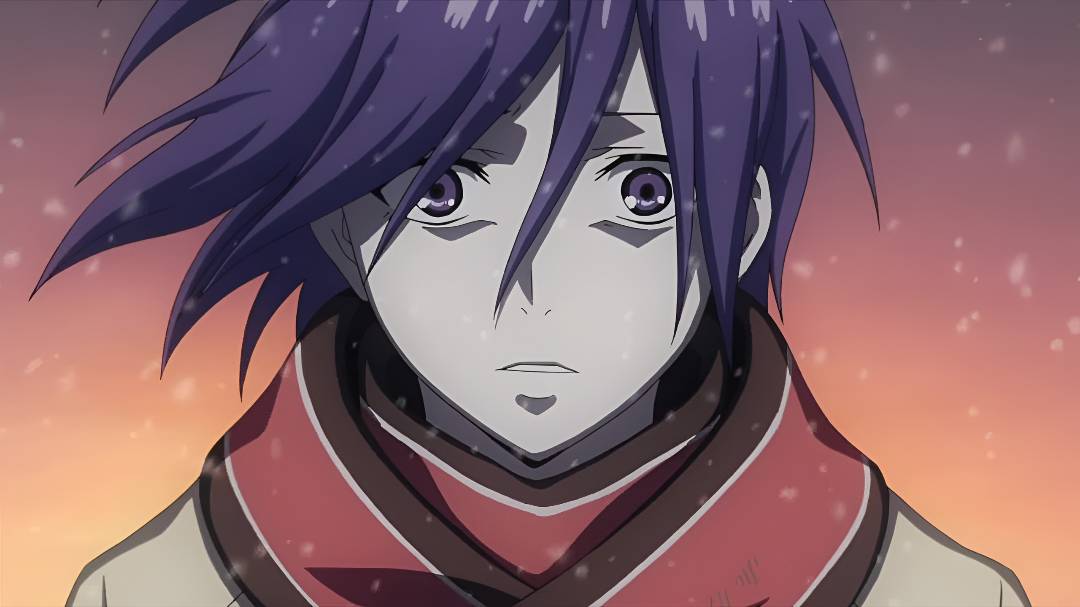
The haunting final image of Kaneki Ken carrying the lifeless body of his best friend, Hide, through a snowy landscape defines the lingering impression left by Tokyo Ghoul: Root A. However, the season’s issues extend far beyond its silent, tragic conclusion; the entire run diverges from Sui Ishida’s source material, taking creative risks that proved wildly controversial. While one could argue the bleakness effectively underscores the heavy price Kaneki pays ahead of his implied confrontation with elite investigator Kishou Arima, the lack of a tangible narrative payoff leaves a frustrating void.
Ultimately, Tokyo Ghoul: Root A stumbles in its delivery. By veering away from the manga’s path, significant portions of the plot feel rushed and unexplained, offering audiences zero catharsis. Because the climactic fight against Arima is only implied, viewers were left thoroughly confused about the fates of major characters. Ambiguous cliffhangers require airtight writing and steady pacing to succeed—two elements sadly missing here, causing a genuinely tragic climax to fall flat.
5
School Days

Visual novels typically rely on branching paths and player choice to contextualize their wilder twists. Adapting that format into a linear 12-episode anime is a tall order, but School Days manages to pull off an undeniably shocking conclusion. The story centers on Makoto Itou, a high school freshman whose romantic entanglements with multiple classmates spiral completely out of control. While the original visual novel features up to 22 different pathways, the anime settles on a brutal finale where Sekai fatally stabs Makoto, only to be cut down in turn by a deeply unstable Kotonoha.
Some fans appreciate this grim direction for actively subverting standard otome tropes and delivering harsh, uncompromising consequences for toxic behavior. The abrupt pivot from a messy teen drama into sheer psychological horror certainly makes a lasting mark. On the flip side, critics argue that School Days relies too heavily on sheer shock value to mask its uneven writing, subjecting its cast to gruesome fates that betray their initial characterization. This sudden tonal leap ultimately undercuts what could have been a nuanced exploration of adolescent relationships.