While contemporary hits like Your Name and Demon Slayer: Infinity Castle have propelled anime films firmly into the mainstream, the medium’s cinematic history runs deep. Long before these recent blockbusters, legendary features—particularly those born from the house of Studio Ghibli—were quietly building passionate cult followings.
Though their animation styles might show their age today, these 1980s cinematic milestones remain essential viewing. Each carries a distinct, timeless magic that permanently shaped the global anime landscape. The ’80s proved to be a golden era for animated features, but these particular titles stand as the absolute pinnacle of the decade.
Akira Shattered the Idea that Animation is Just For Kids

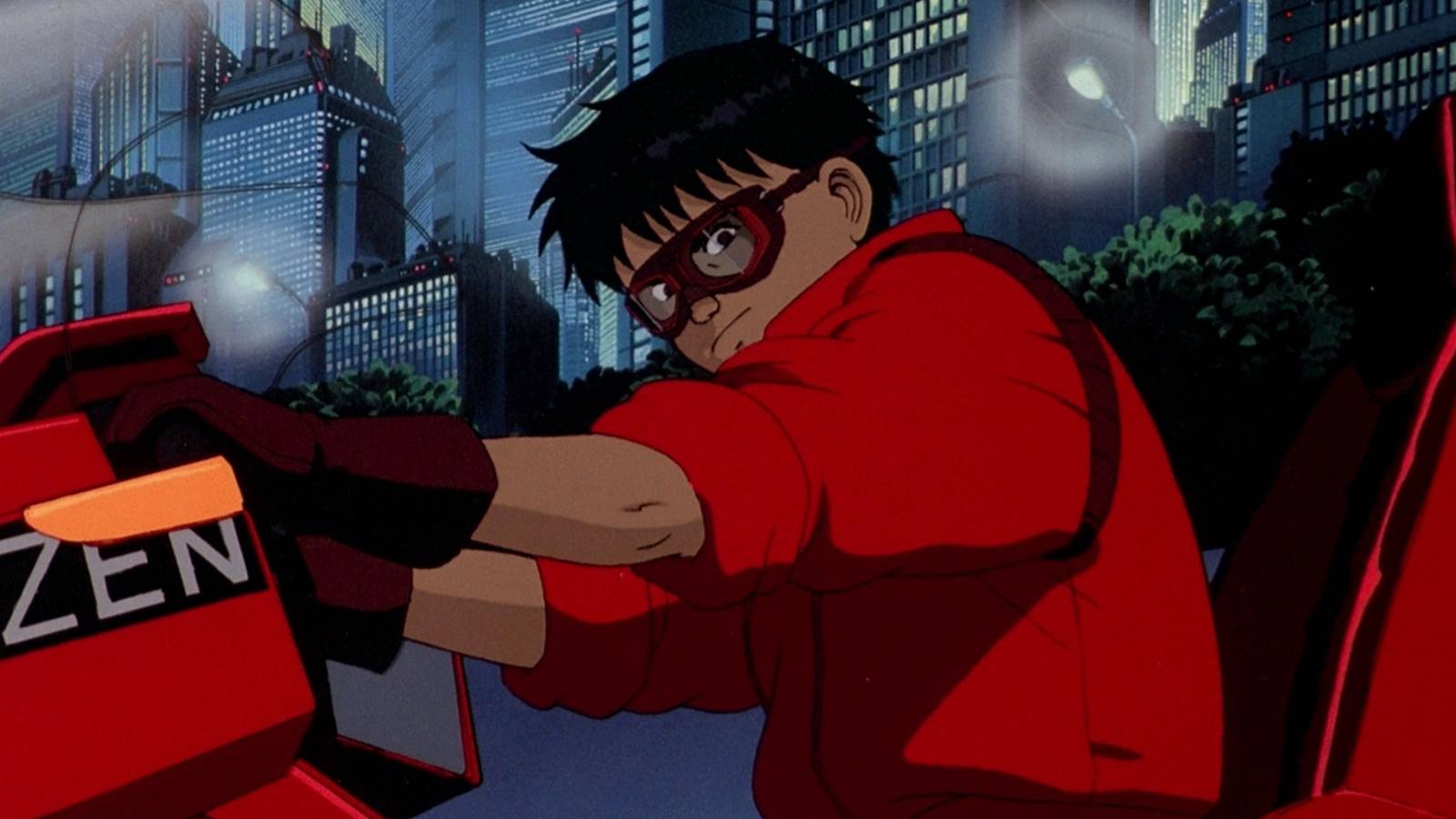
Brought to life by director Katsuhiro Otomo in 1988, Akira stands tall as a titan of cinematic history. It single-handedly opened doors for Japanese animation in the Western mainstream, leaving a legacy so profound that countless Hollywood movies and TV shows still pay homage to its legendary motorcycle skid.
From its painstaking hand-drawn cels to its sharp socio-political commentary, Akira is a marvel of craftsmanship. While the original manga offers deeper lore, the film’s narrative remains remarkably layered and intellectually stimulating, all backed by an unforgettable, pulse-pounding score.
The story centers on Shotaro Kaneda, a brash motorcycle gang leader, and his closest companion, Tetsuo Shima. Following a fateful collision with a strange esper, Tetsuo unlocks terrifying psychic abilities that spark a catastrophic chain of events, ultimately shaping the blueprints for cyberpunk anime.
Kiki’s Delivery Service is a Relatable Coming-of-Age Story
Released in 1989, Kiki’s Delivery Service is an absolute cornerstone of the Studio Ghibli catalog. Beneath its cozy, whimsical exterior lies a profoundly human narrative about Kiki, a 13-year-old apprentice witch who leaves home to carve out her own path toward independence.
Accompanied by her feline companion Jiji—who acts as a tether to her fading childhood—Kiki navigates the trials of self-reliance and the anxiety of trying to fit into a brand-new town. Hayao Miyazaki’s immense empathy infuses every frame, making Kiki’s journey universally resonant and cementing the film as a Ghibli crown jewel.
Rather than relying on classic fantasy tropes like evil villains or dark curses, Kiki’s greatest adversaries are internal: loneliness and debilitating self-doubt. By offering such a tender, subtle exploration of teenage burnout and creative exhaustion, the movie transcends its magical premise entirely.
Grave of the Fireflies is a Heartbreaking Tale of Two Siblings

Isao Takahata engineered what is widely considered one of the most devastating films ever produced with Grave of the Fireflies. Released in 1988, the narrative chronicles the harrowing survival of two young siblings, Seita and Setsuko, caught in the wreckage of World War II’s Pacific theater after they are orphaned and forced to navigate a hostile world.
The emotional weight of the movie deepens exponentially upon learning it is semi-autobiographical. Akiyuki Nosaka penned the original source material to process his own survivor’s guilt after losing family members—including a younger sister—during the conflict.
Unflinching and profoundly grounded, Grave of the Fireflies exposes the cruel toll of war on society’s most vulnerable. It is a vital, unforgettable watch that rightfully commands critical acclaim across the globe.
Angel’s Egg Carries a Haunting Yet Distinct Aesthetic

Angel’s Egg stands as another dark, visionary triumph crafted by Mamoru Oshii, best known for Ghost in the Shell. Its stark, primordial atmosphere immediately transfixes viewers, with composition so meticulously detailed that individual frames resemble living gothic paintings.
The film tracks two anonymous travelers: a young girl zealously safeguarding a massive egg she believes will yield an angel, and a mysterious boy bearing a heavy, cross-shaped weapon. Together, they forge a fragile alliance across a desolate landscape choked with ruins, overgrown flora, and arcane machinery.
Released in 1985, this cryptic feature resists easy summary. Angel’s Egg is an abstract, surreal experience whose meaning shifts depending on how viewers decode Oshii’s heavy religious and existential imagery. While it diverges sharply from the director’s more commercial output, it remains a spellbinding 1980s gem that demands wider appreciation.
Nausicaä of the Valley of the Wind Features a Great Protagonist and a Deep Message

Among Hayao Miyazaki’s celebrated filmography, Nausicaä of the Valley of the Wind sometimes flies under the casual fan’s radar, despite featuring some of his most sophisticated storytelling and world-building. Miyazaki has always excelled at writing multi-dimensional, grounded female leads, and Nausicaä serves as the gold standard for this trait.
Though she is royal by birth, Nausicaä is fundamentally a fierce warrior whose true power stems from radical empathy. She serves as the emotional anchor for the film’s environmental thesis, striving to discover a path for humanity to coexist with the sprawling Toxic Jungle rather than destroy it.
The poisonous wasteland isn’t portrayed as a malicious entity, but rather as a natural consequence of mankind’s historical hubris and warfare. By viewing the environment through Nausicaä’s compassionate lens, Nausicaä of the Valley of the Wind elevates itself into an epic sci-fi fantasy masterpiece.